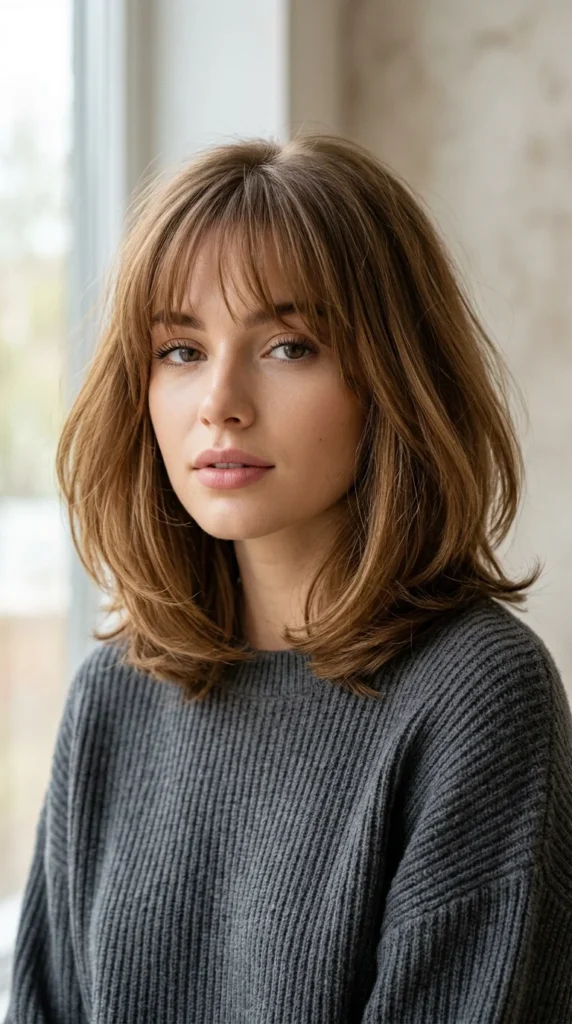

Thin hair often feels like a styling uphill battle. It can go flat within hours, lack the “oomph” we see in magazines, and feel limp despite our best efforts with volumizing sprays. However, the “Lob”—or long bob—is the ultimate equalizer. Falling somewhere between the chin and the collarbone, this length is the “sweet spot” for fine strands. It’s long enough to feel feminine and versatile, but short enough that the weight doesn’t pull the hair down, allowing for maximum lift and density.
The secret to a voluminous lob lies in the cutting technique. By strategically removing weight or adding blunt lines, a stylist can create the optical illusion of thickness. Here are 15 masterful lob variations designed to breathe life into thin hair, along with the face shapes they flatter most.
1. Blunt Cut
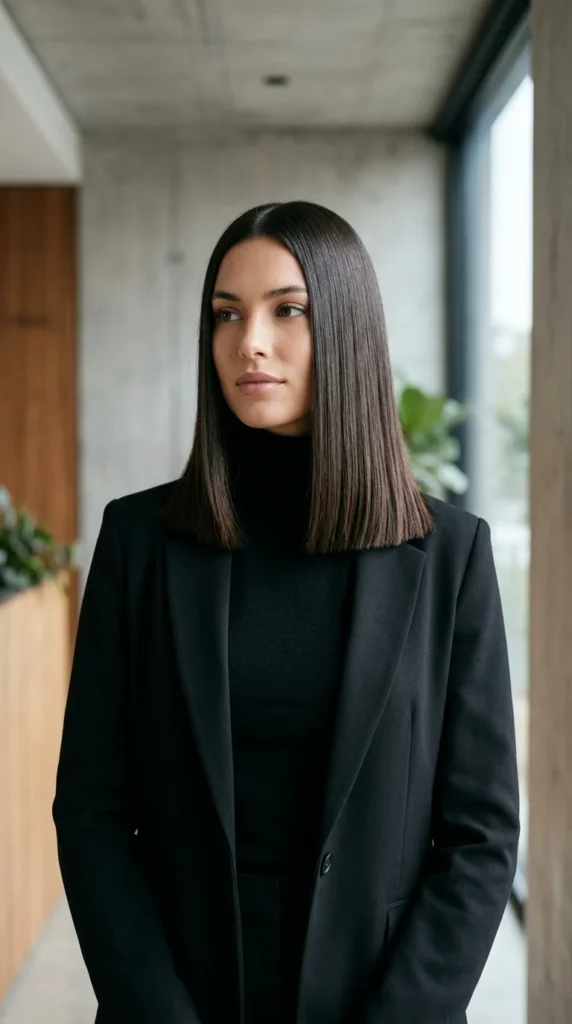
The blunt lob is the gold standard for thin hair. When you cut hair in a straight, horizontal line, you maintain the maximum density at the ends. This prevents the “see-through” look that often plagues fine hair. By keeping the perimeter solid, the hair appears much thicker and healthier from root to tip.
- Why it works: Creates an immediate illusion of fullness and weight.
- Best Face Shape Match: Oval and Heart. The sharp horizontal line helps balance out a pointed chin.
2. Textured Layers
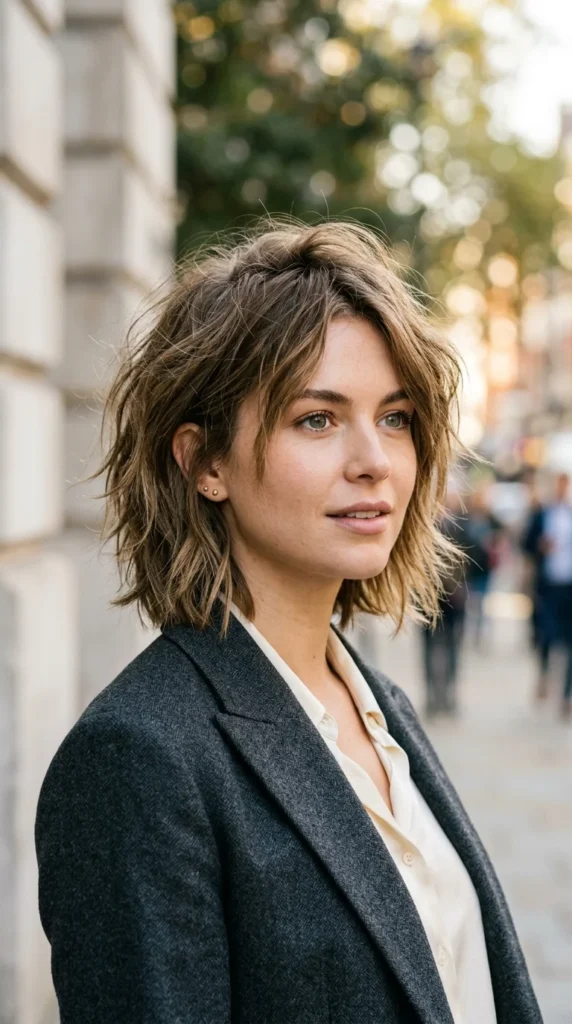
If a blunt cut feels too “heavy” for your style, textured layers are the answer. Unlike traditional long layers that can make thin hair look sparse, textured layers are shorter and “chopped” into the hair to create internal movement. This allows the hair to bounce and stack on top of itself, creating height.
- Why it works: Adds “grit” and prevents the hair from lying flat against the scalp.
- Best Face Shape Match: Round and Square. The texture breaks up the symmetry of the face.
3. Deep Side Part
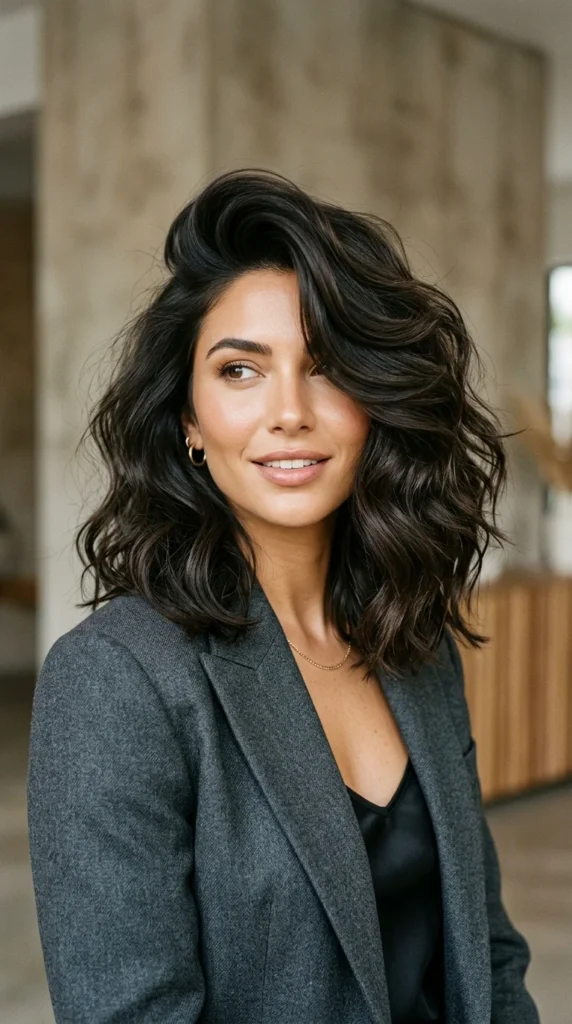
Sometimes, the best haircut is actually a styling trick built into the cut. A lob cut specifically to be worn with a deep side part creates an instant “lift” at the roots. By pushing the bulk of your hair to one side, you create a concentrated area of volume that makes the entire mane look more substantial.
- Why it works: Gravity works in your favor here, pushing the hair upward at the part line.
- Best Face Shape Match: Long or Rectangular. The side-heavy volume adds width to the face.
4. Choppy Ends

Choppy ends involve using point-cutting techniques to create a “shattered” look at the bottom of the lob. This is perfect for thin hair because it adds a sense of “organized chaos.” When the ends aren’t perfectly uniform, they look fuller because they occupy more visual space.
- Why it works: Provides a modern, “undone” look that disguises fine strands.
- Best Face Shape Match: Heart and Diamond. The width at the bottom balances a narrow jawline.
5. A-Line Lob
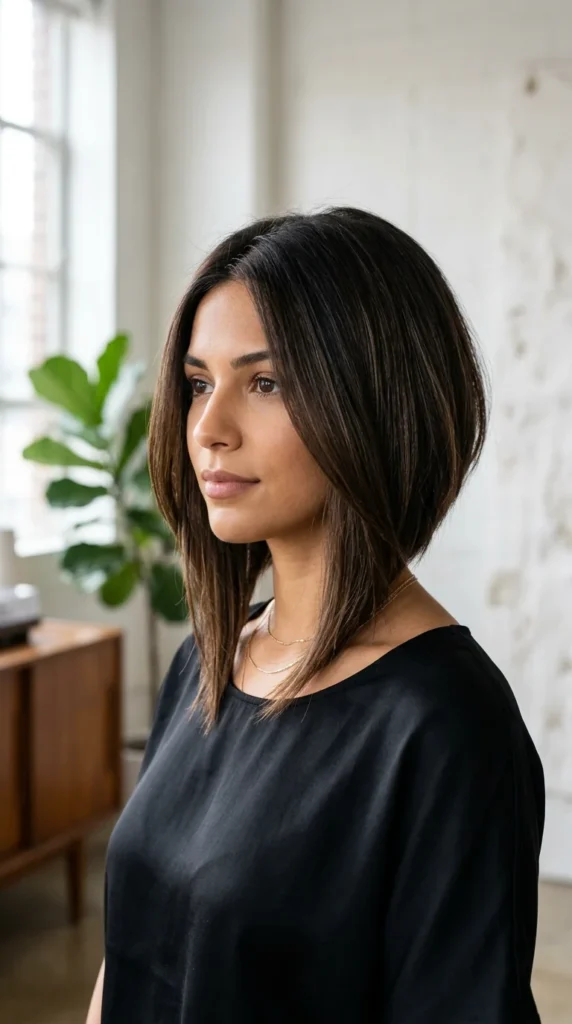
The A-line lob is a classic for a reason. By keeping the back slightly shorter, you remove the weight that usually flattens the crown. The longer pieces in the front provide the “length” you crave while framing the face beautifully.
- Why it works: The angle creates a natural forward-leaning volume.
- Best Face Shape Match: Round. The elongated front pieces help slim the face.
6. Soft Waves

While not a “cut” in the strictest sense, a lob cut specifically to be worn wavy is a game-changer. Ask for “invisible layers”—layers cut underneath the top section—to support the waves. Waves add physical width to your hair, making it look twice as thick as it does when straight.
- Why it works: Curvature creates shadows and highlights that imply depth and thickness.
- Best Face Shape Match: All shapes, particularly Square and Rectangular, as it softens harsh angles.
7. Inverted Lob
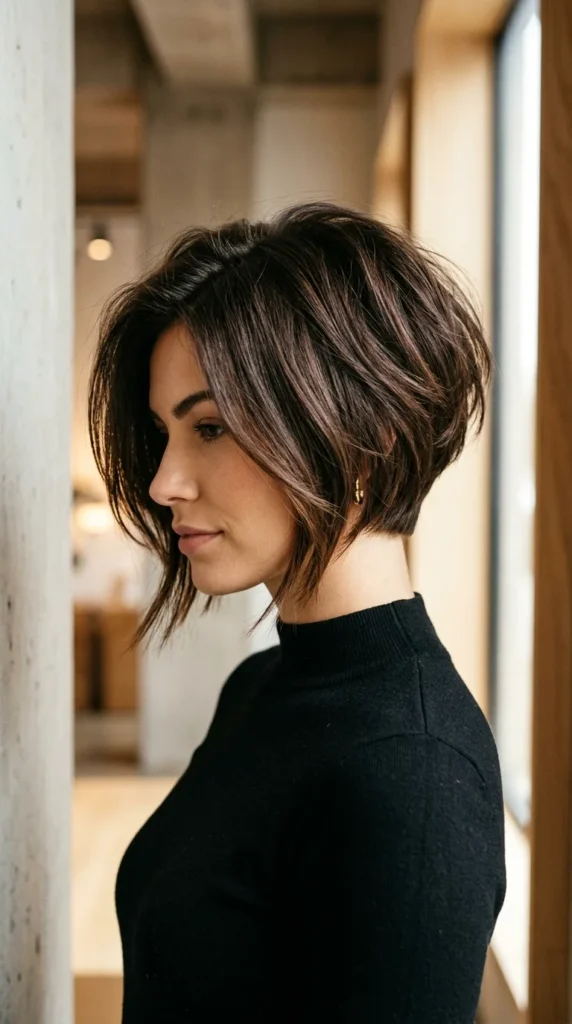
The inverted lob is more dramatic than the A-line. It features “stacking” in the back, where the hair is cut in graduated layers. This creates a literal shelf of hair that pushes the top layers up, ensuring you never have “flat-head” again.
- Why it works: Built-in structural volume at the back of the head.
- Best Face Shape Match: Oval and Round. The sharp angle adds definition to the jaw.
8. Feathered Lob
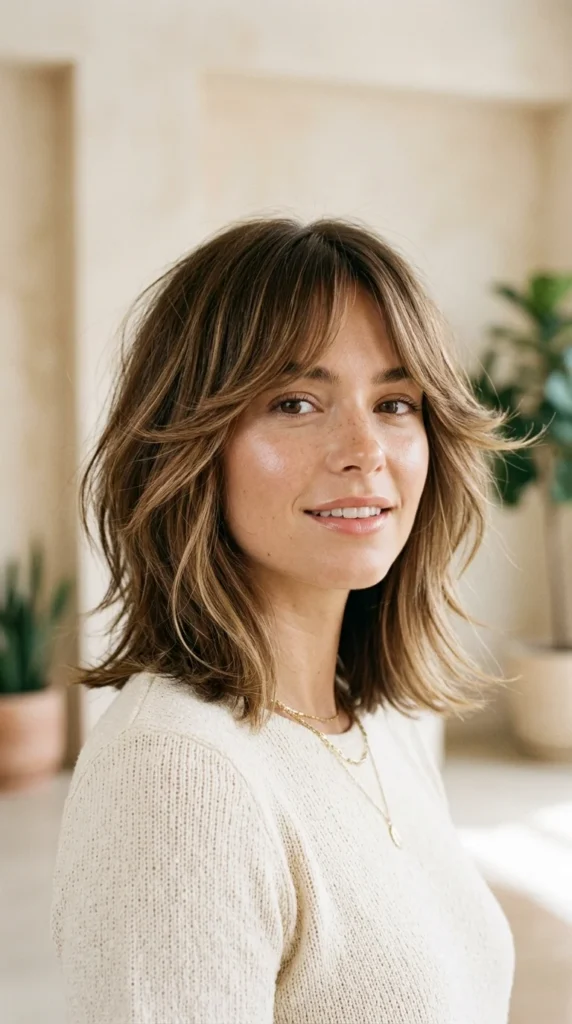
Feathering involves thinning out the very ends of the layers to create a light, wispy effect that flicks upward. For thin hair, this “flick” creates the appearance of more hair because the strands are spread out rather than clumping together.
- Why it works: Creates an airy, voluminous silhouette without needing heavy products.
- Best Face Shape Match: Diamond and Heart. The outward movement adds volume near the cheekbones.
9. Face-Framing Layers
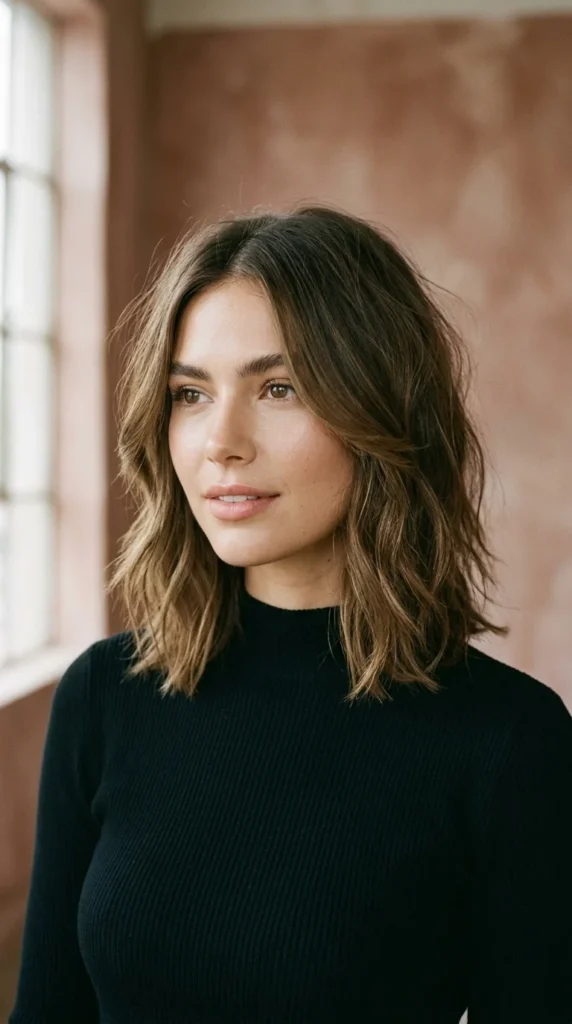
For those who fear losing density, face-framing layers are the perfect compromise. The back and sides remain blunt to keep the thickness, while the pieces around the face are stepped down. This adds interest and “lift” right where people look the most.
- Why it works: Focuses the volume and movement around the face rather than the ends.
- Best Face Shape Match: Long and Oval. It “shortens” the face by creating horizontal interest.
10. Wispy Bangs Lob
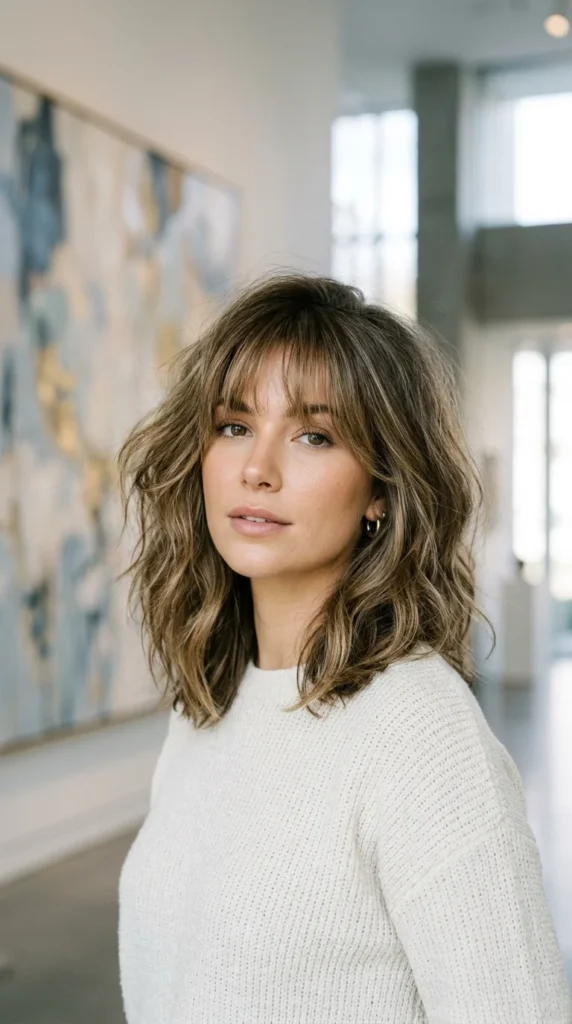
Bangs are often scary for thin-haired women, but “wispy” bangs are actually a secret weapon. By taking a small amount of hair from the top to create a fringe, you create a new layer of height. It also draws the eye upward to the eyes and brow, away from the ends of the hair.
- Why it works: Adds a “fuller” look to the front of the style.
- Best Face Shape Match: Heart and Long. Covers a larger forehead and balances a narrow chin.
11. Asymmetrical Lob
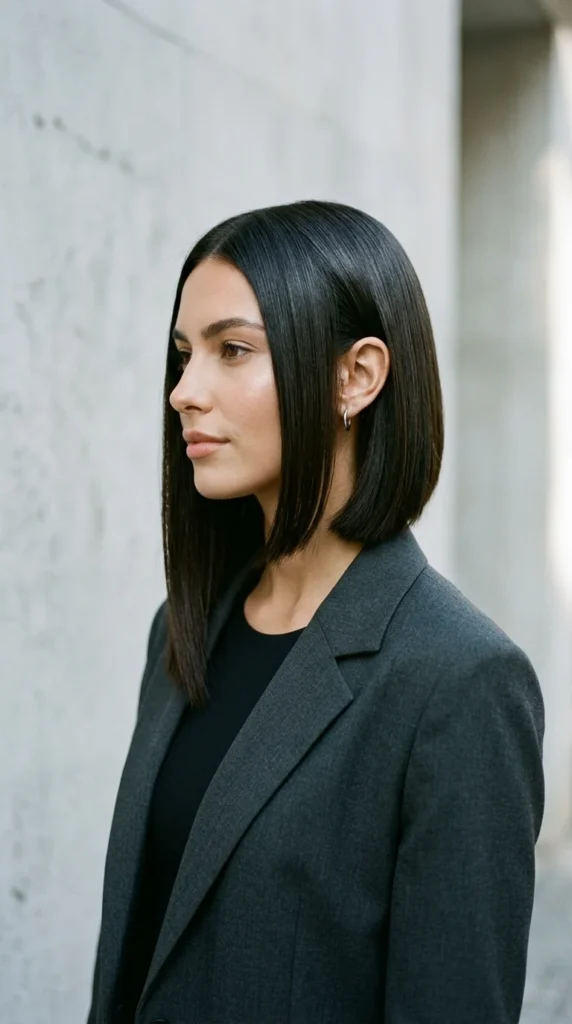
The asymmetrical lob is for the bold. By having one side longer than the other, you create a visual distraction. The lack of symmetry makes it harder for the eye to perceive the actual thickness of the hair, usually resulting in a look that feels more “designed” and “full.”
- Why it works: The offset lengths create a sense of dynamic volume.
- Best Face Shape Match: Round and Square. The asymmetry breaks up the roundness or boxiness of the face.
12. Razor-Cut Lob

Using a razor instead of scissors allows the stylist to create tapered, sharp ends that have incredible “swing.” For thin hair, this creates a lot of internal movement. When you move your head, the hair separates in a way that looks intentional and voluminous.
- Why it works: Increases “swing” and prevents the hair from looking like a single, flat sheet.
- Best Face Shape Match: Oval and Square. The softness of the razor edge offsets a strong jaw.
13. The “Middy” Lob
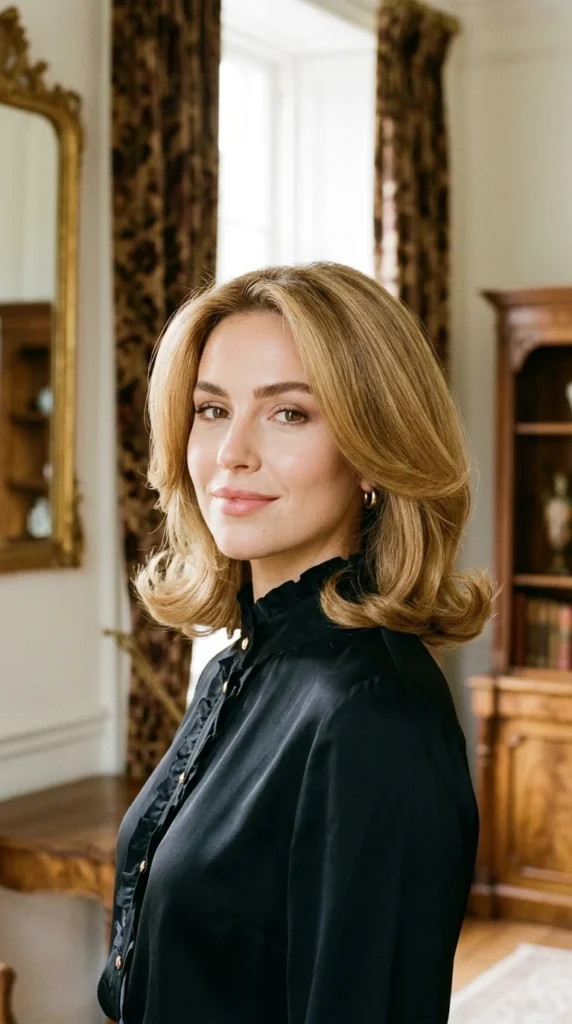
The “Middy” is a vintage term for a mid-length cut. It relies on a subtle U-shape in the back. By rounding the corners, the hair bunches together slightly, which makes the back of your hair look much denser than a straight-across cut might.
- Why it works: The U-shape concentrates the hair’s mass toward the center.
- Best Face Shape Match: Oval and Diamond. The rounded shape complements balanced features.
14. Curtain Bangs Lob

Curtain bangs are the gold standard for adding volume to a lob. They create a “curtain” of hair that swoops out and back, creating a massive amount of lift at the temple and cheekbone area. This is often where thin hair looks the flattest, so curtain bangs solve the problem directly.
- Why it works: Creates a “double layer” of volume at the top of the head.
- Best Face Shape Match: Square and Rectangular. The swooping motion softens the forehead and jawline.
15. Shaggy Lob

The shag is back, and it’s a miracle for thin hair. By incorporating many short layers starting from the crown, the shaggy lob forces the hair to stand up and out. It’s the ultimate “high-volume” cut because it relies on the hair being messy and full of air.
- Why it works: Maximizes crown volume and creates a multi-dimensional look.
- Best Face Shape Match: All shapes, but particularly effective for Round faces looking for height.