There is nothing quite like the feeling of hitting the trail, lungs filling with crisp mountain air and the rhythmic crunch of gravel beneath your boots. However, for those of us with medium-length hair, the experience can quickly turn into a tangled nightmare. Between the constant friction of backpack straps, the salty accumulation of sweat, and the snagging potential of tree branches, your hair often ends up a bird’s nest by the time you reach the summit.
The “medium-length” struggle is unique: your hair is often too short for a heavy single braid to stay put, yet long enough to whip around and get caught in the buckles of your chest strap. To help you focus on the views rather than your flyaways, we have curated the ultimate list of trail-tested hairstyles that are secure, stylish, and—most importantly—strap-safe.
1. Low Braided Bun
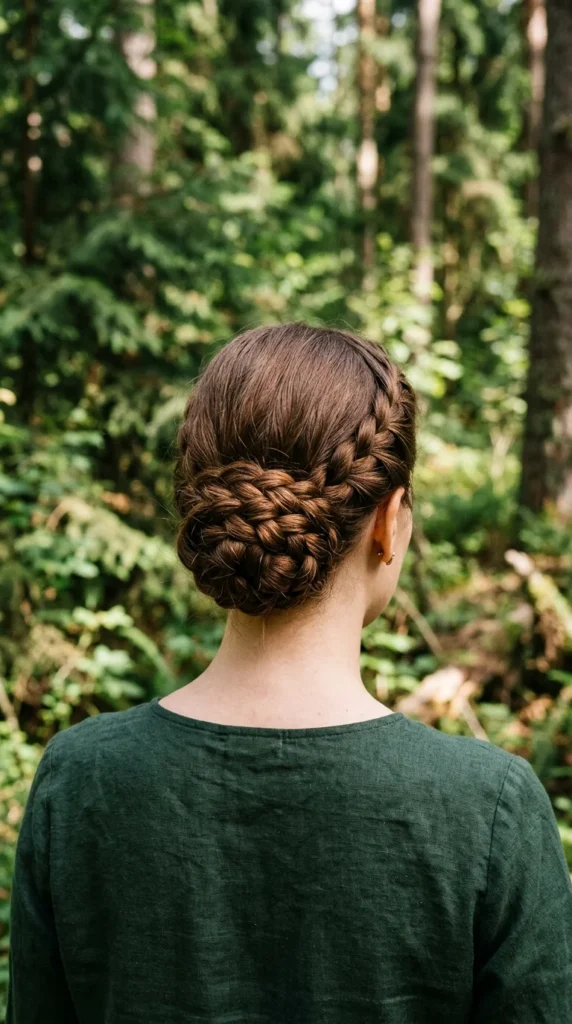
The low braided bun is the gold standard for heavy-duty hiking. By braiding the hair before swirling it into a bun at the nape of the neck, you create a structure that is far more resistant to movement than a simple “messy bun.” Because it sits below the point where most backpack shoulder straps meet the neck, it eliminates the risk of hair being pinched or pulled as you adjust your load. It also keeps your hair completely off your neck, which is a lifesaver on hot, humid ascents.
2. Double French Braids
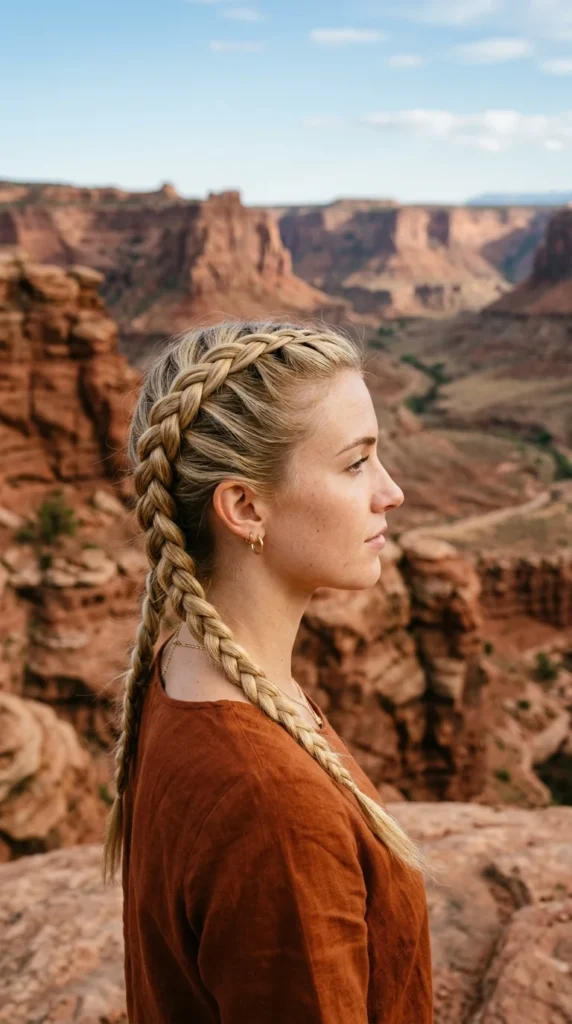
French braids are a classic for a reason. By weaving the hair close to the scalp, you secure the shorter layers that usually fall out of a ponytail. Double braids distribute the weight of your hair evenly across your head, preventing the “tension headache” that sometimes comes from a single heavy tail. This style is incredibly aerodynamic and stays flush against the head, meaning no loose strands will get caught in your pack’s hydration tube or chest clip.
3. Dutch Braid Pigtails
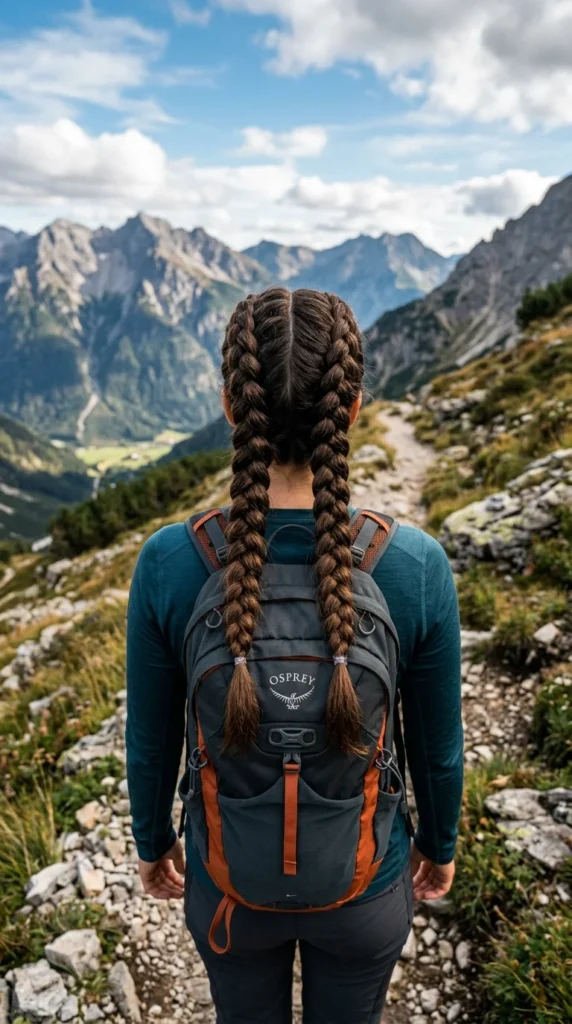
Dutch braids—also known as “inside-out” braids—provide even more security than French braids. Because the hair is crossed under rather than over, the braid sits on top of the hair, creating a shield-like effect. This is particularly effective for medium hair that has layers. The tightness of the Dutch style ensures that even after eight hours of trekking through wind, your hair remains exactly where you put it in the morning.
4. High Bubble Ponytail
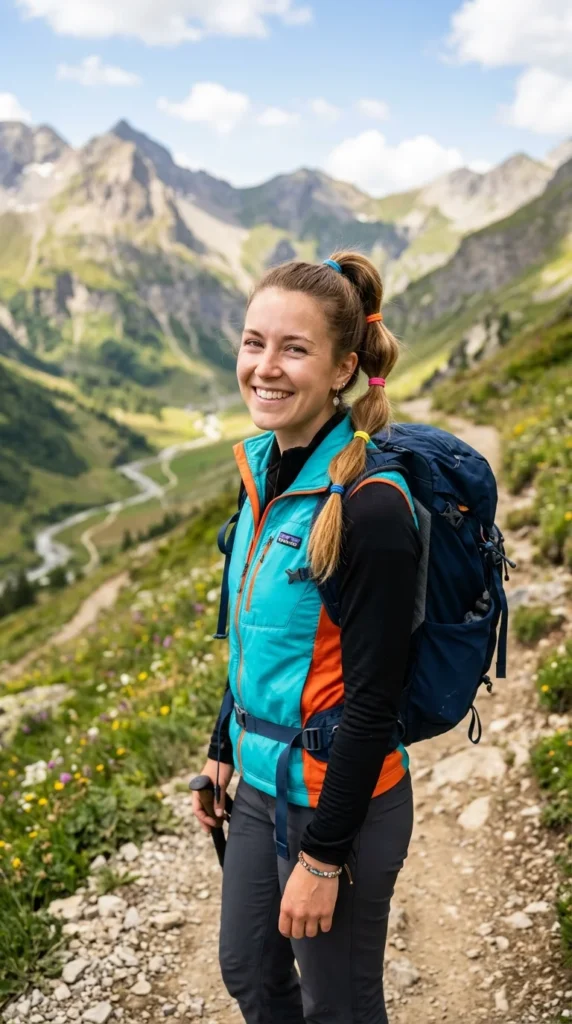
If you aren’t a master braider, the bubble ponytail is your best friend. It offers the security of a braid with half the effort. By placing elastics every two to three inches down the length of your ponytail, you prevent the hair from fanning out and getting snagged. For medium hair, this usually results in two or three “bubbles.” It’s a playful, high-energy look that stands up remarkably well to high-impact hiking and scrambling.
5. Fishtail Crown
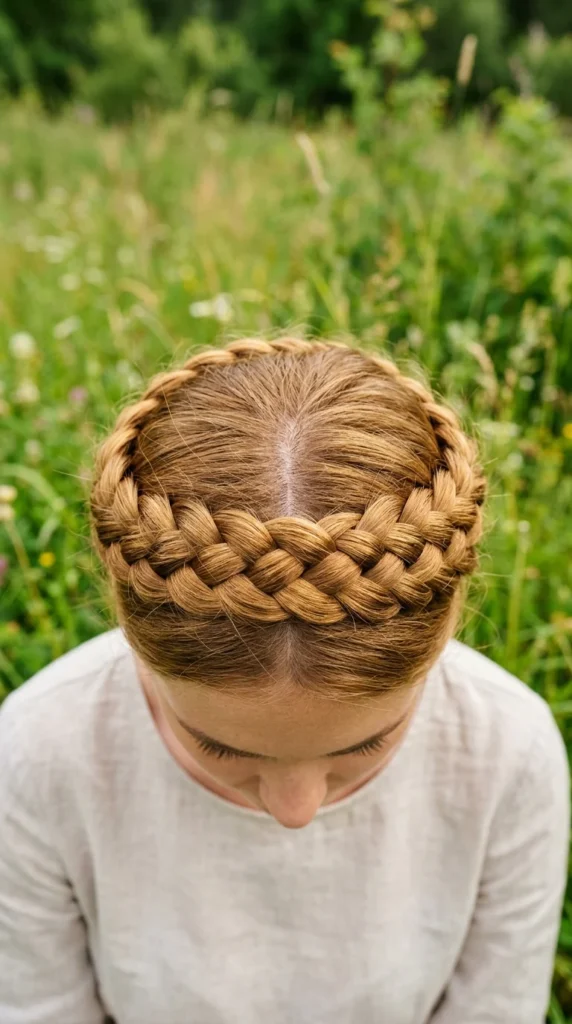
The fishtail crown is for the hiker who wants to transition straight from the trail to a post-hike dinner. While it looks complicated, it is actually just two fishtail braids pinned across the top of the head. By pinning the hair up, you remove the “tail” entirely, meaning there is zero chance of it getting caught in your pack. It also acts as a natural sweatband, keeping hair away from your face and forehead during steep climbs.
6. Slick Back Knot
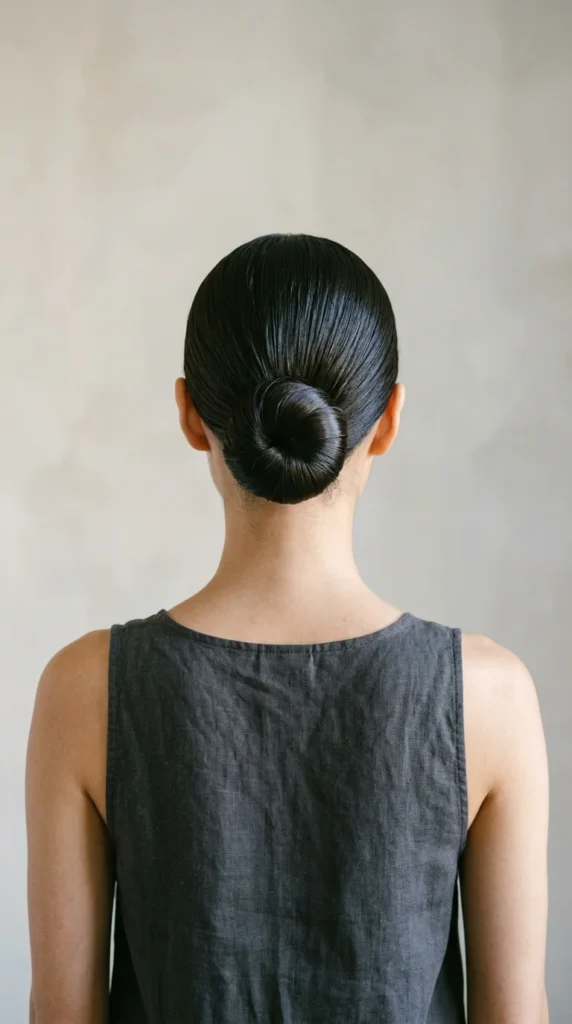
When the terrain gets rough and the wind starts howling, the slick back knot is the ultimate “set it and forget it” style. Using a bit of light-hold wax or even just water, pull the hair back into a tight knot. This style is excellent for medium hair because it compresses the volume, making it less likely to be disturbed by the movement of your backpack. It’s the most aerodynamic choice for ridge walks where the wind is a factor.
7. Sectioned Low Pony
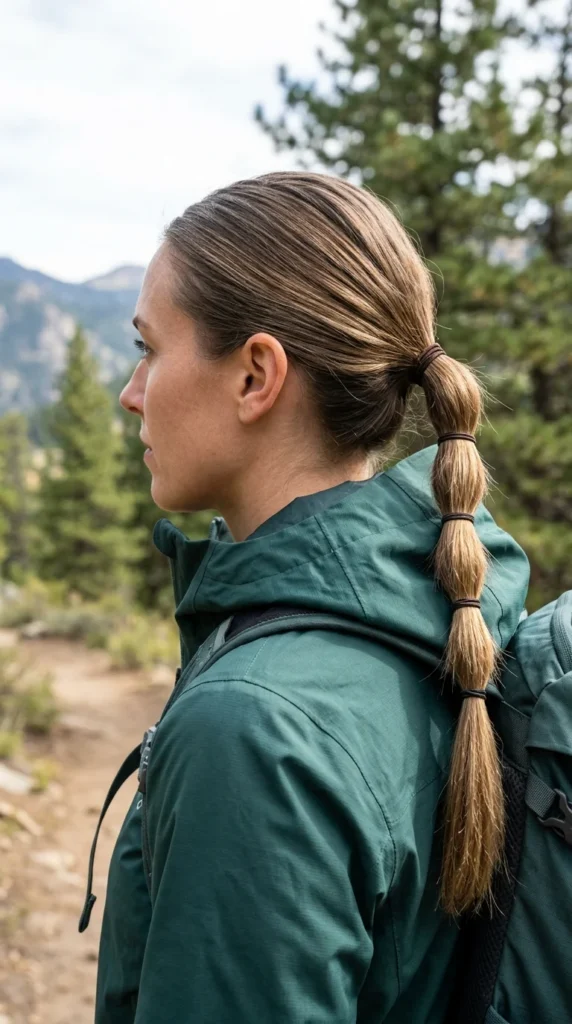
Similar to the bubble pony but positioned lower, the sectioned low pony is designed specifically for backpack compatibility. By keeping the base at the nape of the neck, you ensure the hair stays below the “interference zone” of the shoulder straps. The multiple sections prevent the “fan” effect that happens when medium hair brushes against the fabric of a pack, which usually leads to massive knots at the ends.
8. Inside-Out Braid
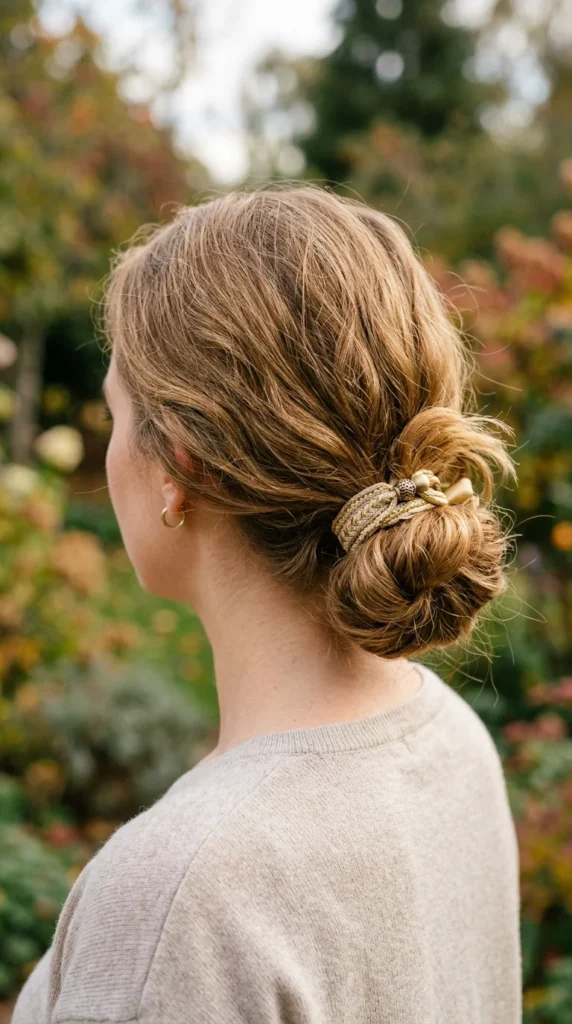
The inside-out braid (or tucked braid) is a clever trick for medium-length hair. You braid a single French or Dutch braid down the center of your head, then take the remaining tail and tuck it back up under the braid, securing it with pins or a sturdy clip. This effectively “shortens” your hair for the duration of the hike, keeping the ends completely protected from friction and environmental damage.
9. Multiple Mini Buns
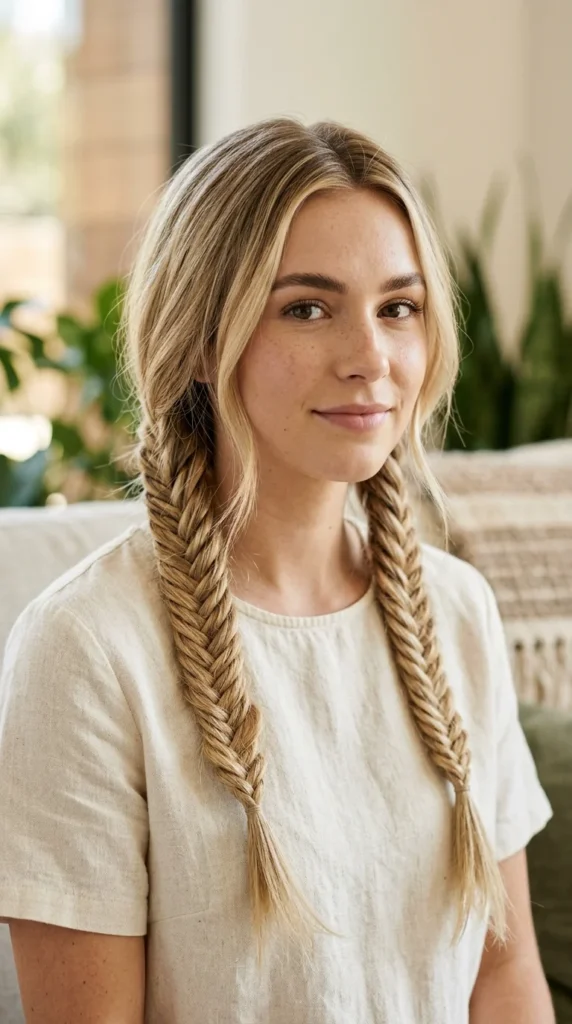
Sometimes called “space buns” when there are two, the three-bun vertical alignment is a powerhouse for hikers with lots of layers. By dividing the hair into three sections (top, middle, and bottom) and twisting each into a small, tight bun, you ensure that even the shortest hairs at the base of your neck are secured. It distributes the weight perfectly and looks modern and adventurous.
10. Braided Top Knot
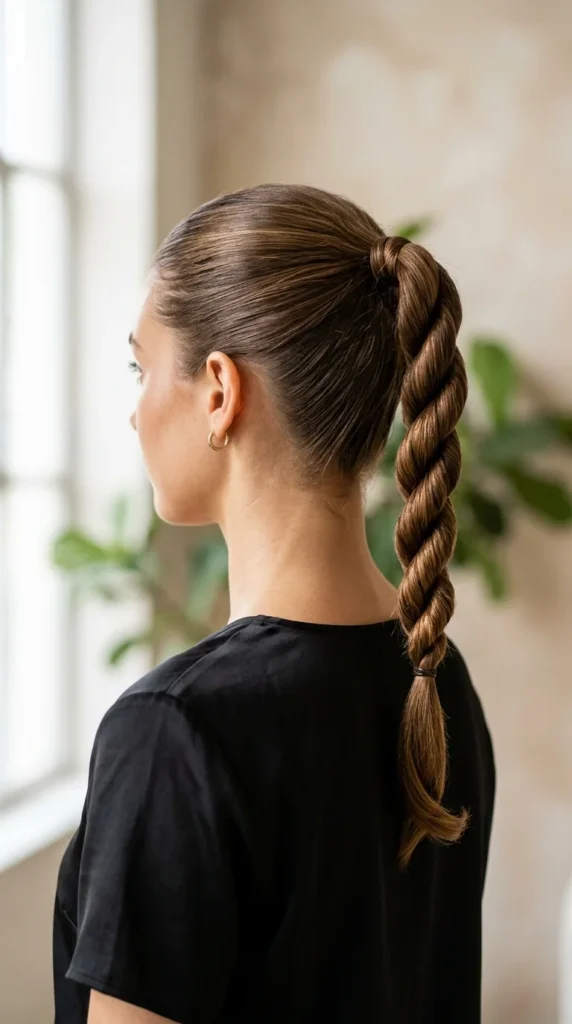
This is the “reverse” approach. Instead of braiding down, you flip your head over and French braid from the nape of your neck toward your crown. Once you reach the top, you gather all the hair into a secure bun. This is a brilliant solution for hikers who find that the hair at the base of their neck always gets sweaty and matted. It keeps the neck completely clear and moves the bulk of the hair to the highest possible point.
11. Reverse Dutch Braid
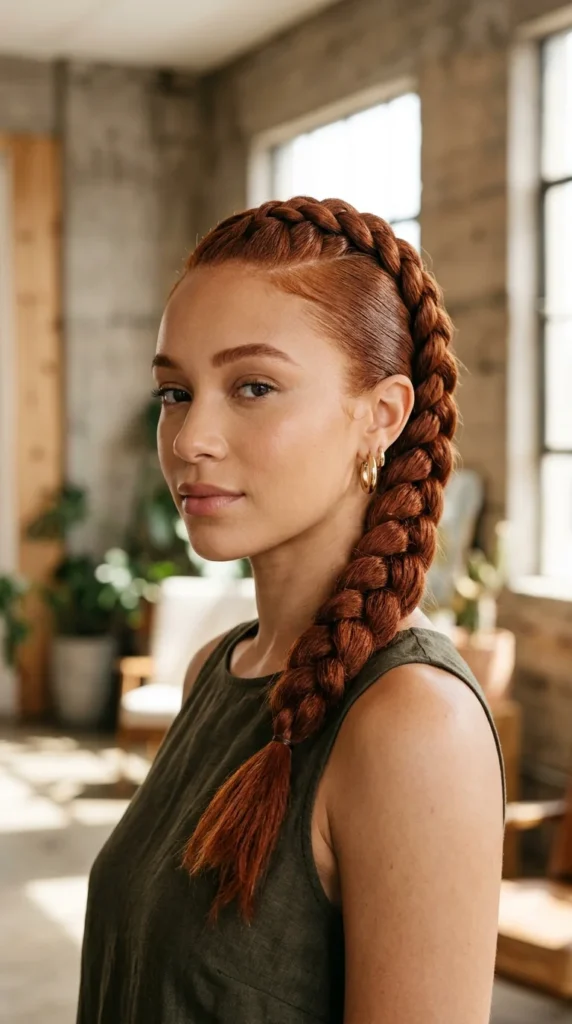
The reverse Dutch braid focuses on securing the sides. For medium hair that tends to fall forward into the face, this style pulls everything back with high tension. By tucking the tail into the braid itself, you create a streamlined shape that won’t interfere with your peripheral vision or your pack’s sternum strap. It’s a rugged look that says you’re ready for a serious trek.
12. Side Fishtail Braid
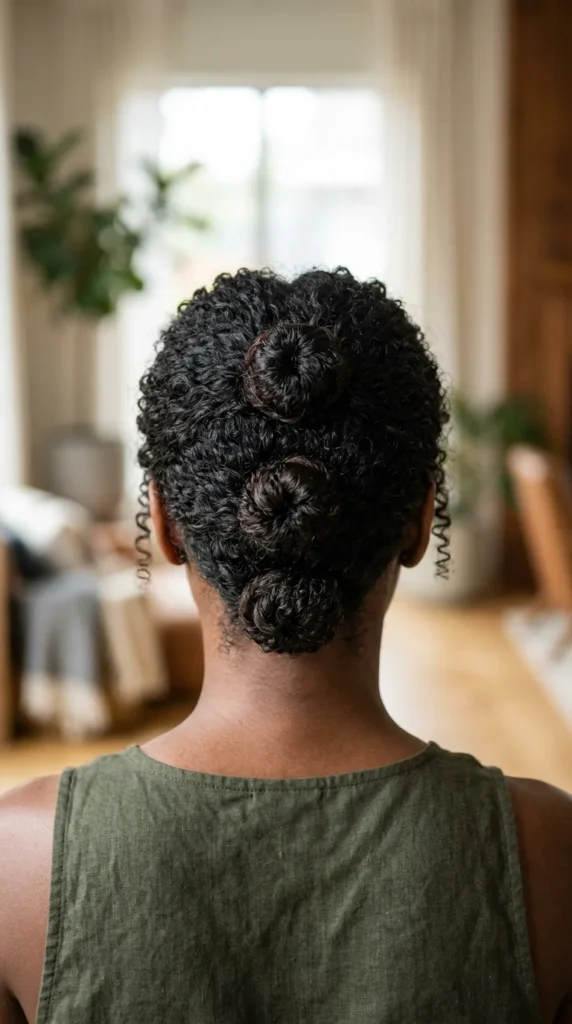
If you prefer a softer look but still need security, the side fishtail is the way to go. By bringing the hair over one shoulder, you move it away from the central area where your pack straps are most active. A fishtail weave is much tighter than a standard three-strand braid, meaning it’s less likely to come undone even if it rubs against your clothing.
13. Twist-and-Pin Low Bun
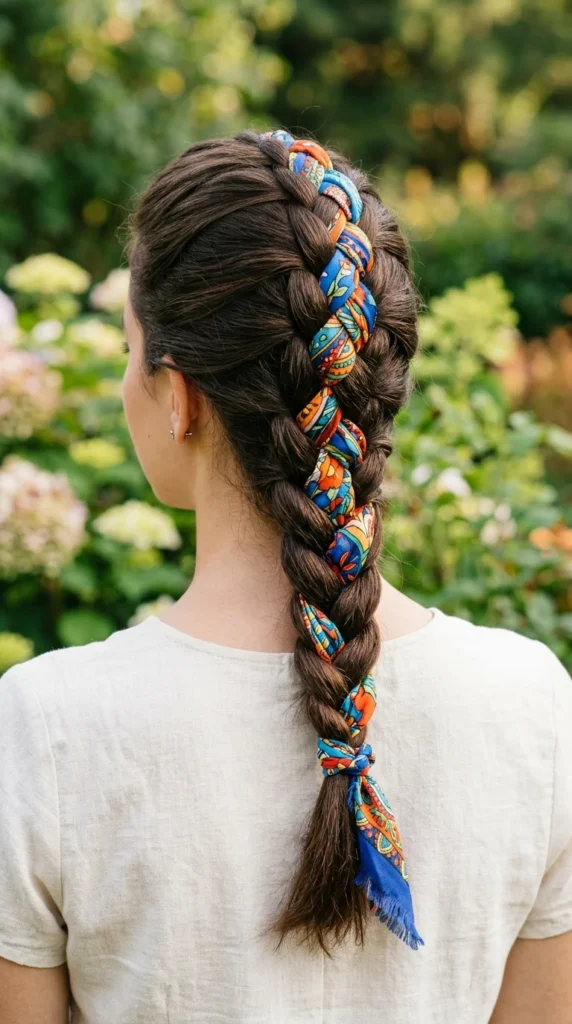
For those with hair that is just a bit too short for a full braid, the twist-and-pin method is a savior. Twist the hair on either side of your head toward the back, incorporating new strands as you go. Once the twists meet at the nape, roll them into a low bun. This style provides the same security as a braid but works better for hair with blunt-cut ends or shorter layers that might “poke out” of a traditional braid.
14. The Triple Bun
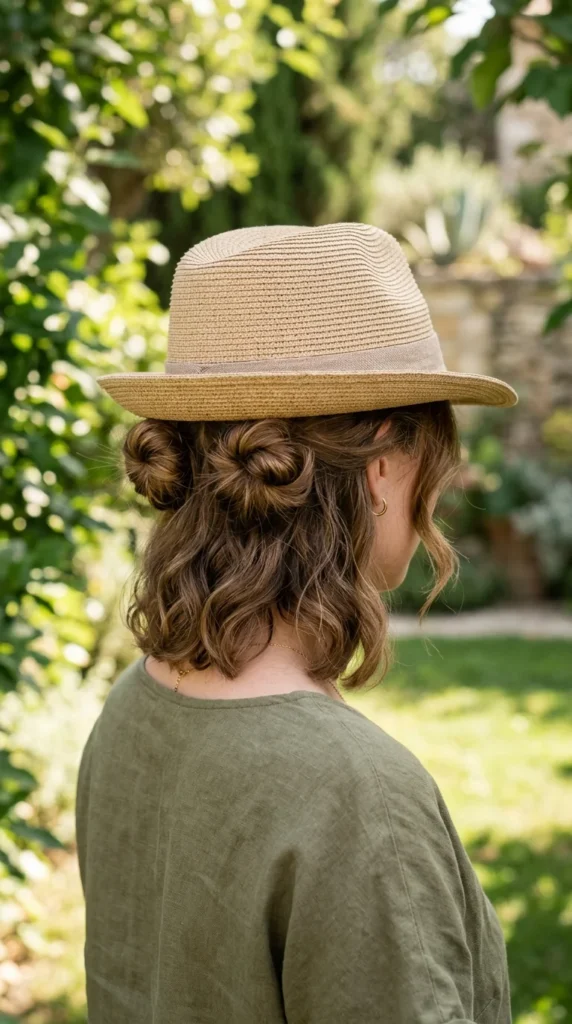
The triple bun is the horizontal alternative to the vertical mini-buns. This is especially effective for medium-length hair that is very thick. By splitting the hair into three small buns side-by-side at the nape, you create a very low-profile style that sits comfortably beneath the brain/lid of a large trekking pack. It avoids the “bulge” that a single large bun might create, which can sometimes push your head forward uncomfortably when wearing a pack with a high frame.
15. Braided Headband with Pony
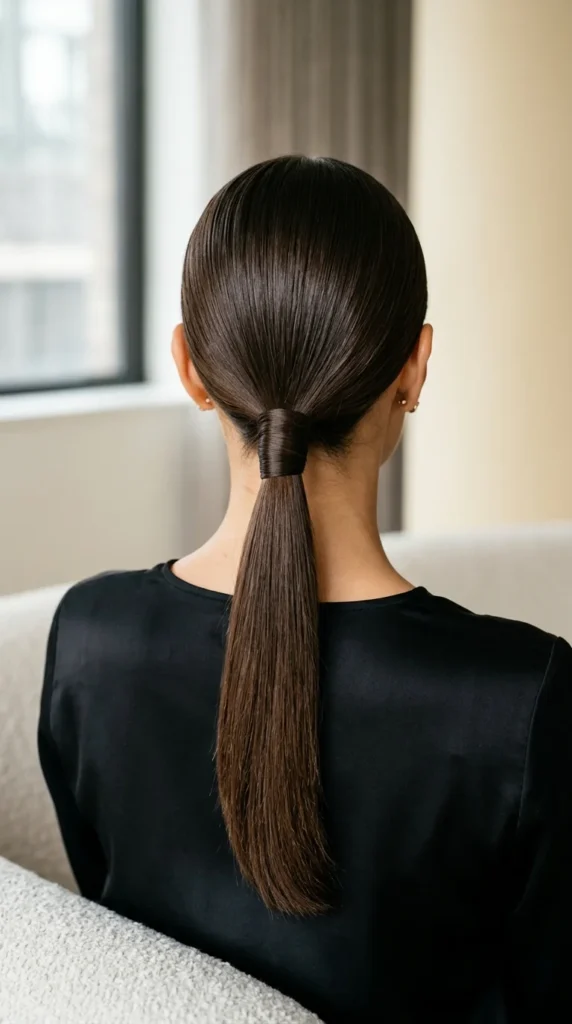
Sometimes the biggest annoyance isn’t the pack straps, but the “baby hairs” that stick to a sweaty forehead. The braided headband solves this by French braiding a small section of hair along the forehead from ear to ear. The rest of the hair is then pulled back into a secure ponytail. This gives you the best of both worlds: the face-framing security of a braid and the simplicity of a pony.
Expert Tips for Trail-Ready Hair
To ensure your chosen style lasts from the trailhead to the campsite, keep these tips in mind:
- Ditch the Metal: Use “ouchless” elastics or silicone bands. Metal connectors can snag hair, especially when your pack is vibrating or shifting as you walk.
- The Power of Texture: Hiking hair stays put better if it’s “dirty.” If you’ve just washed your hair, use a bit of dry shampoo or sea salt spray to give it some grip before braiding.
- Sun Protection: Remember that braids expose your scalp in new places. If you aren’t wearing a hat, apply a bit of spray-on sunscreen to your parts to avoid a painful scalp burn.
- The Silk Scrunchie Trick: If you’re doing a multi-day trek, use a silk scrunchie for your “night bun” to prevent breakage while you sleep in your tent.
By choosing one of these strap-safe styles, you can stop worrying about your hair and start focusing on the trail ahead. Happy hiking!